

The Khandoba Temple, also known as ‘Jejuri Khandoba Mandir,’ is dedicated to Lord Khandoba, a form of Lord Shiva. The temple is not just a spiritual center but also a historical site that dates back to the 17th century, built during the Maratha rule. Its architecture reflects a blend of Maratha and traditional temple styles, making it a unique heritage structure.
1. The Grand Entrance and Temple Steps
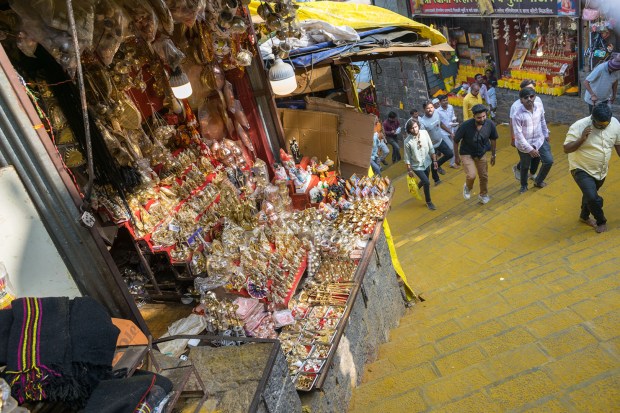
The journey to the temple begins with a long flight of steep steps carved into the hill. These steps, over 400 in number, are not just functional but also symbolic of the devotion and determination of the pilgrims.
Architectural Highlights:
- Arches and Pillars: At intervals, arches supported by carved pillars serve as resting points, providing shade and architectural elegance.
- Step Design: Notice the worn yet beautifully crafted steps, which have weathered centuries of footfall and hold a rustic charm.
2. The Temple Facade
The temple’s facade is a masterpiece of Maratha architecture, adorned with intricate carvings and towering shikharas, or spires. The blend of symmetry and detail is breath-taking.
Architectural Highlights:
- Main Temple: The grand temple of Khandoba is decorated with intricate patterns and mythological motifs, setting the tone for what lies inside.
- Shikharas: The temple’s spires rise high against the sky, symbolizing a connection between the earthly and the divine.

3. The Temple Courtyard
The temple is surrounded by a spacious courtyard, consisting of pillared corridors. This space is bustling with activity especially during Somvati Amavasya, making it perfect for capturing candid moments.
Architectural Highlights:
- Turmeric-Coated Walls: During festivals, the walls are coated with turmeric, creating a striking contrast against the stone carvings.
- Frames and Arches: The corridors showcase rows of intricately carved pillars, statues, and arches, each unique in design, adding rhythm to the space.

4. Somvati Amavasya
At Jejuri, during Somvati Amavasya, that is when a new moon day falls on a Monday, a grand Palkhi Yatra is held. It sees Lord Khandoba and Mhalsa Devi’s idols being carried in a vibrant procession, uniting thousands of devoted pilgrims.
Architectural Highlights:
- Sonyachi Jejuri: When the palkhi is taken out, the entire atmosphere is bustling with turmeric to give beautiful golden hues everywhere.
- Ornate Crowd: The beautifully sculpted temple comes to life, with thousands of devotees gathering and throwing bhandara in the bustling atmosphere.

5. The Panorama of Jejuri from the Temple
The hilltop location of the Khandoba Temple offers panoramic views of Jejuri and its lush surroundings. It’s a breath-taking sight that adds to the temple’s allure.
Architectural Highlights:
- Capture the Landscape: Use a wide-angle lens to include the temple’s edge in the frame, juxtaposed against the vast landscape.
- Golden Hour Glow: Shoot during sunrise or sunset to capture the warm light illuminating the temple and the valley.

The Khandoba Temple is more than just a spiritual landmark; it’s a testament to the skill and devotion of those who built it. Through its architecture, we glimpse stories of the past, devotion of the present, and hope for the future. Thank you for joining me on this journey through the Khandoba Temple.
Also Read – 10 Tips for Ganpati Photography
CONNECT WITH ME:
YouTube: https://www.youtube.com/user/agarwalsonika7
Instagram: https://www.instagram.com/agarwalsonika/
Twitter: https://www.twitter.com/agarwalsonika7/
Facebook: https://www.facebook.com/sonikatravels/
 UI/UX DESIGNER | PHOTOGRAPHER